What causes high eye pressure and why should you measure it?
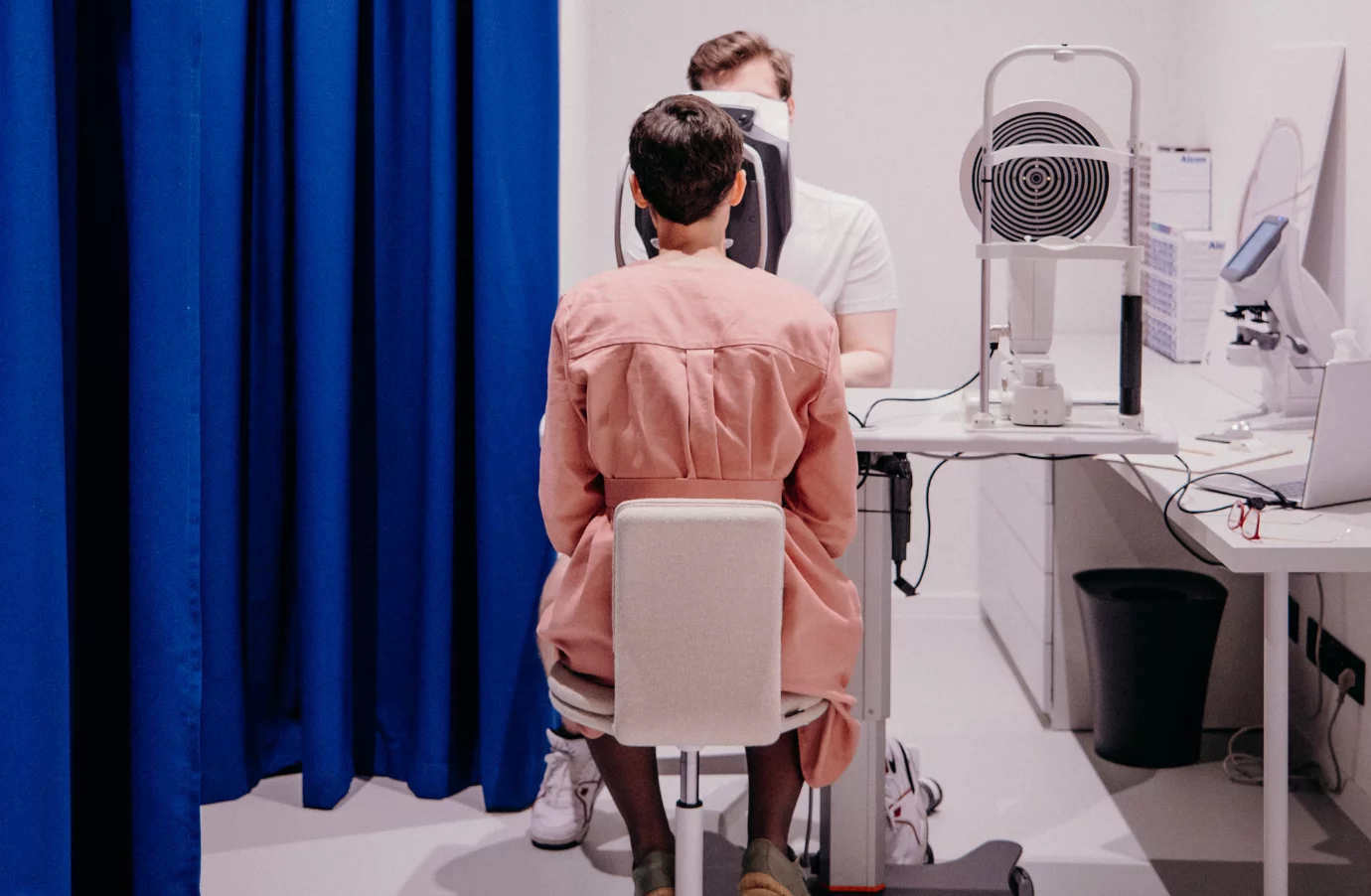
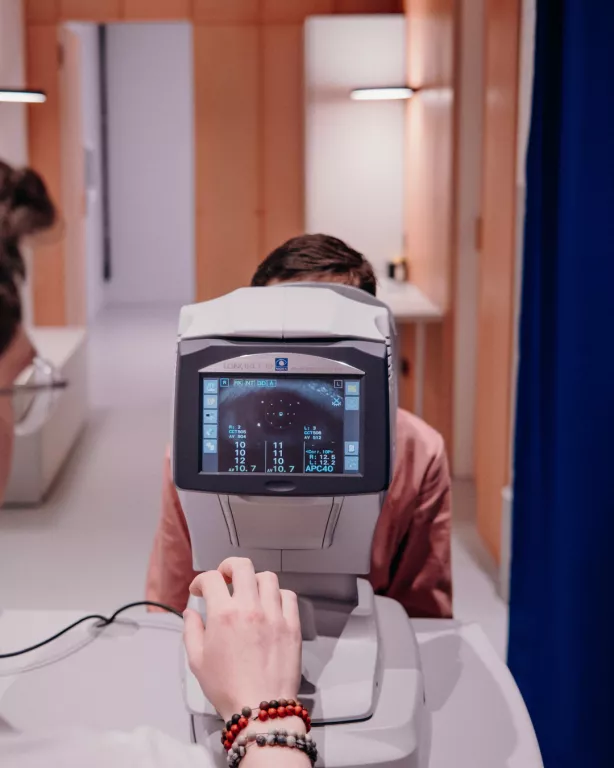
Eye pressure is one of the key factors affecting the health of our eyes. Its value tells us more about the condition of the eyes and can also be a warning signal for certain eye conditions, like glaucoma.
29. January 2025, Author: Barbara Garaj, Photo: Martin Guniš, Jakub Čaprnka
Eye pressure inside the eye can be influenced by the mutual positioning of eye structures – the lens, vitreous, muscles, or iris. These structures exert a certain pressure on each other, but problems arise when they're pressed together too much.
High intraocular pressure affects our retina most of all – the thin membrane where receptors for capturing light are located. When the retina is compressed, it's mainly the nerve cells themselves and the blood vessels in the eye wall that feel it.
Inside the eye, aqueous humor forms – fluid containing nutrients, including oxygen, that circulates and drains away through outflow channels. The balance between produced and drained fluid must be equal, so when this balance is disrupted, eye pressure problems occur.
Imagine you have a clogged sink at home and the water suddenly has nowhere to drain. You end up with a small flood in the bathroom. Our eye's drainage channels work similarly.
The aqueous humor being produced is suddenly faster than what should be draining away, so it accumulates directly inside the eye. The overall pressure in the eye increases and individual structures press more on each other, with the vitreous causing pressure on the retina.
Compression of the retina means blood can't reach its layers and cells begin to die. Simply put, they have no nourishment and our receptors in the eye stop functioning. But we don't feel high eye pressure. So how do we find out we have it?
Measuring intraocular pressure at ZITA
In the past, doctors had a harder time measuring eye pressure. They checked it by pressing on the eye and sensing whether it was tense or full. If they felt a hard eye, they'd detected high eye pressure. They usually used fingers, simple instruments, or weights for measuring.
At our optician's, we measure your eye pressure contact-free and, most importantly, painlessly. The measurement happens during a professional optometric examination, where the optometrist measures your pressure using a device. We determine eye pressure values by puffing air into each eye separately.
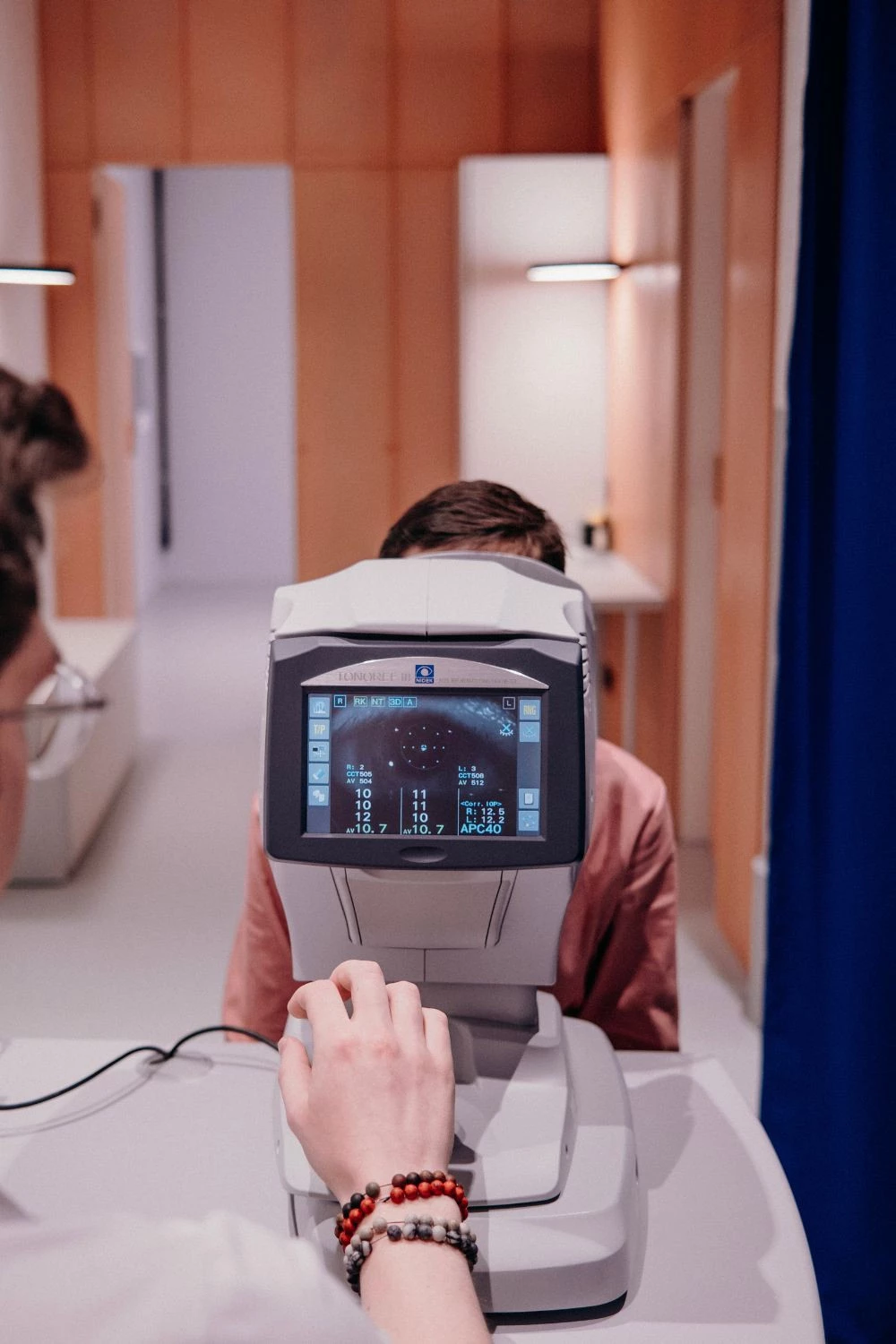
The measurement doesn't happen with the puff alone. Air and infrared light come from the device, which measures the flattening of the cornea by the air. We get the eye pressure value based on how long it takes for the cornea to flatten. The device also has a built-in pachymeter that measures corneal thickness, allowing us to measure eye pressure more precisely.
If we measure high values, that's where our competencies end. We'll refer you to an ophthalmologist who will focus on deeper diagnostics.
What can cause high eye pressure and what influences it?
Eye pressure balance is essential for optimal eye function. Elevated eye pressure is considered critical as it can lead to damage of the optic nerve, which can cause gradual vision loss. Low pressure, on the other hand, occurs only rarely.
We can attribute high eye pressure to genetics and heredity, for example. If glaucoma has occurred in your family, you have a predisposition to high pressure. It also appears in cases where you've had a head or eye injury, undergone eye surgery, or if the eye or brain has been damaged in some other way.
If we measure high eye pressure during your examination, it doesn't immediately mean we've found glaucoma or another serious condition.
Since you don't even feel it during ordinary days, its high values might unpleasantly surprise you – but the sooner we detect high pressure, the faster we can take care of your eye health. Get rid of unnecessary pressure and book an appointment for an examination at ZITA.