Filter against blue light


Blue light glasses pop up everywhere these days. But you'll also read plenty of distorted information about them. How does blue light actually affect us?
28. October 2021, Author: Zuzka Tvarošková, Photo: Jakub Čaprnka
Light shapes our daily functioning. Sunlight radiates the full spectrum of visible colours from violet to red. The intensity in which they reach our eyes changes throughout the day. Towards evening, natural green and blue light diminishes, and our body knows it's time for sleep. In the morning, blue-turquoise light wakes us up again.
Every part of the visible colour spectrum, including the blue one, matters to us. But through artificial lighting and digital screens, we expose ourselves daily to much more frequent and intense blue light radiation, which can cause difficulties for our eyes.
.webp)
The visible spectrum sits at wavelengths of 380-800 nm. Roughly 30% of the visible spectrum is blue light. It's found at wavelengths of 380-500 nm. Blue light divides into blue-violet (380-450 nm) and blue-turquoise (450-500 nm).
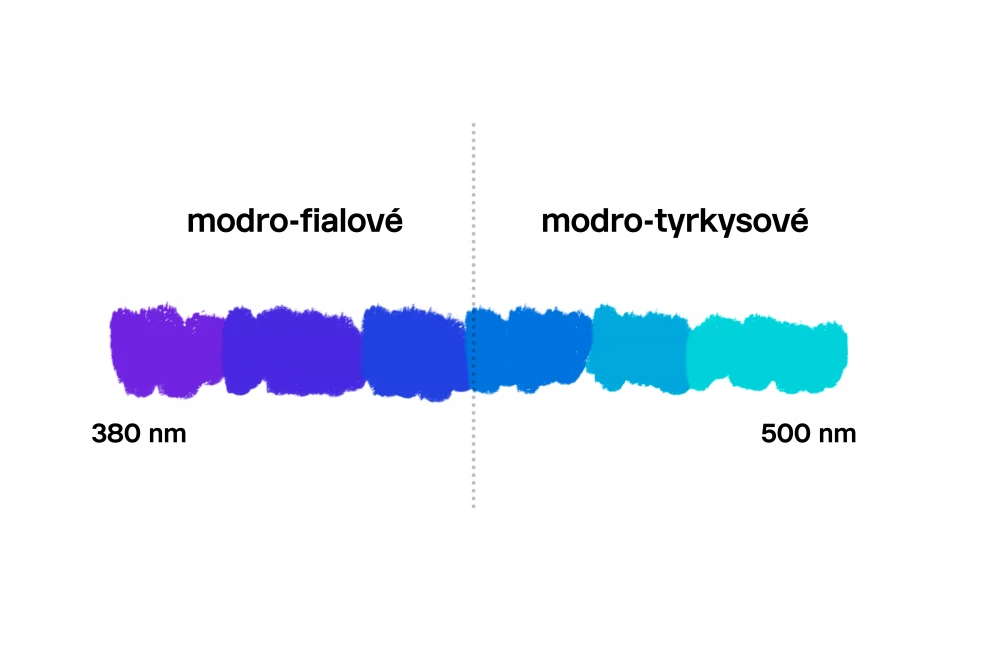
Blue-violet light poses a risk to the retina and is worth partially filtering when looking at screens and under artificial lighting. Our eyes receive far more of it than in the past. It's short-wave light with high energy. Long-term exposure to this part of blue light can lead to greater risk of retinal cell damage (macular degeneration). This most commonly shows up after age 55. But it's important we protect our eyes already today.
Blue-turquoise light isn't dangerous for eyes. We don't recommend filtering it during the day. It ensures regular circadian rhythm (the biorhythm of waking and sleeping) and is essential for maintaining alertness and concentration. During the day it improves work performance, energy and focus. And for that we really can be grateful. We should try to limit it before sleep though. It blocks melatonin production (the sleep hormone). If we expose ourselves to it before lying down for the night, it can affect sleep quality.
And now we're getting to the riskiest light for our eyes. It's important that blue light filter glasses (so-called blue light glasses) filter wavelengths around 435 nm. Just as we don't need the entire blue spectrum filtered, we don't need it filtered 100%, only partially.
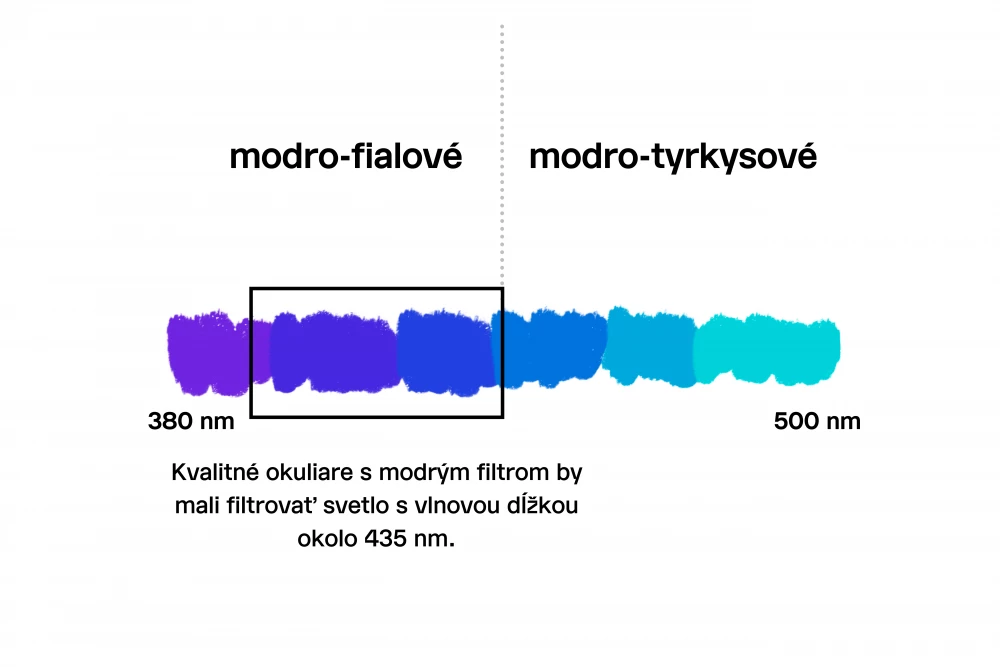
What you should know about blue filter glasses
If you work a lot at the computer, we recommend investing in blue filter glasses as prevention. However, you should really use these glasses primarily when looking at screens or when you're in rooms with strong LED lighting. You don't need to wear them during walks outside. Take care when driving too – in evening hours they can cause reflections in the lens periphery. Some people find this bothersome, others don't even notice.
Graphic designers working with colours should be careful with blue filter glasses, as they can slightly distort colours.
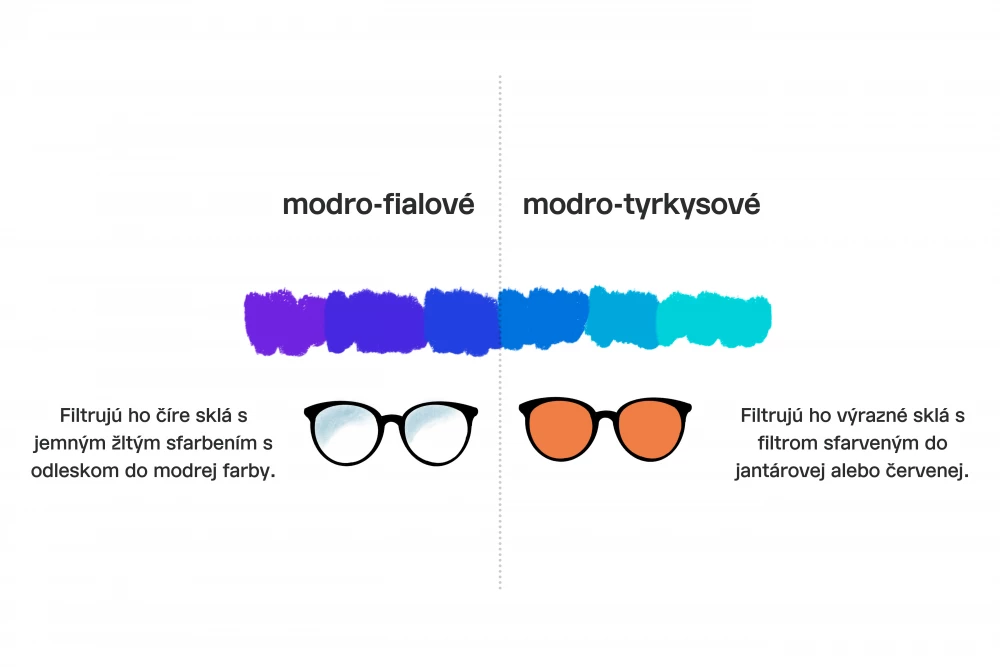
Clear blue filter glasses don't affect sleep quality and circadian rhythm. These filters block the dangerous part of blue light for our retina. For now they serve more as prevention, since the degree of blue light harmfulness is still being tested.
If you need to solve sleep problems or protect yourself in evening hours, only glasses with a special strong filter tinted amber or red will help. But we'd leave that topic to biorhythm specialists. If you work at the computer in the evening or spend time on mobile or tablet, turn on night mode, which dims your screen to orange. Nearly all devices have this today.
Do all blue filter glasses properly protect our retina?
Unfortunately not. Cheap glasses that ads may have targeted you with don't always block the right wavelength around 435 nm. That's why they're often more of a marketing lure than real help. We certainly don't want to throw everyone into one basket though – many good sellers exist. We recommend turning to an optician where you trust the specialists.
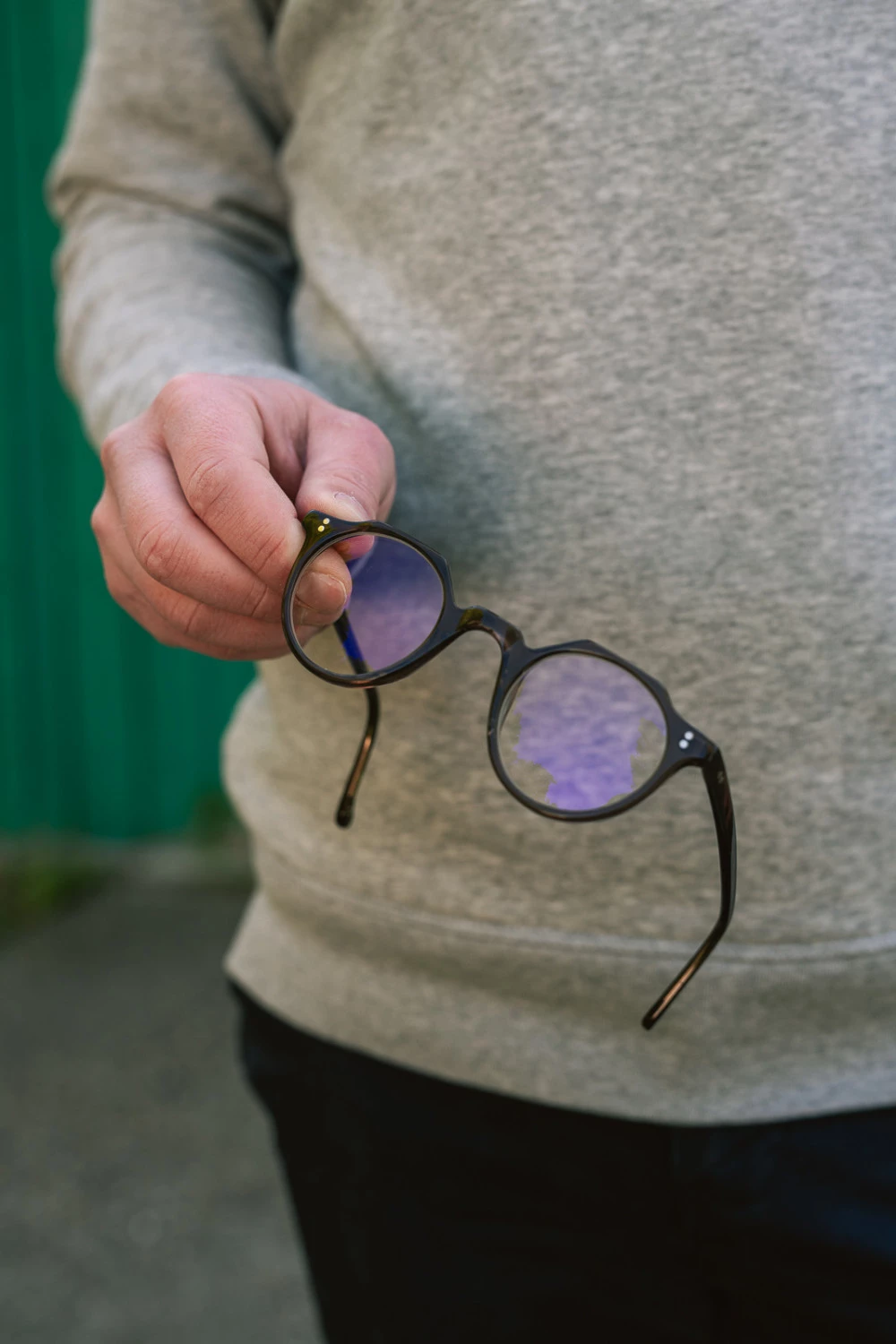
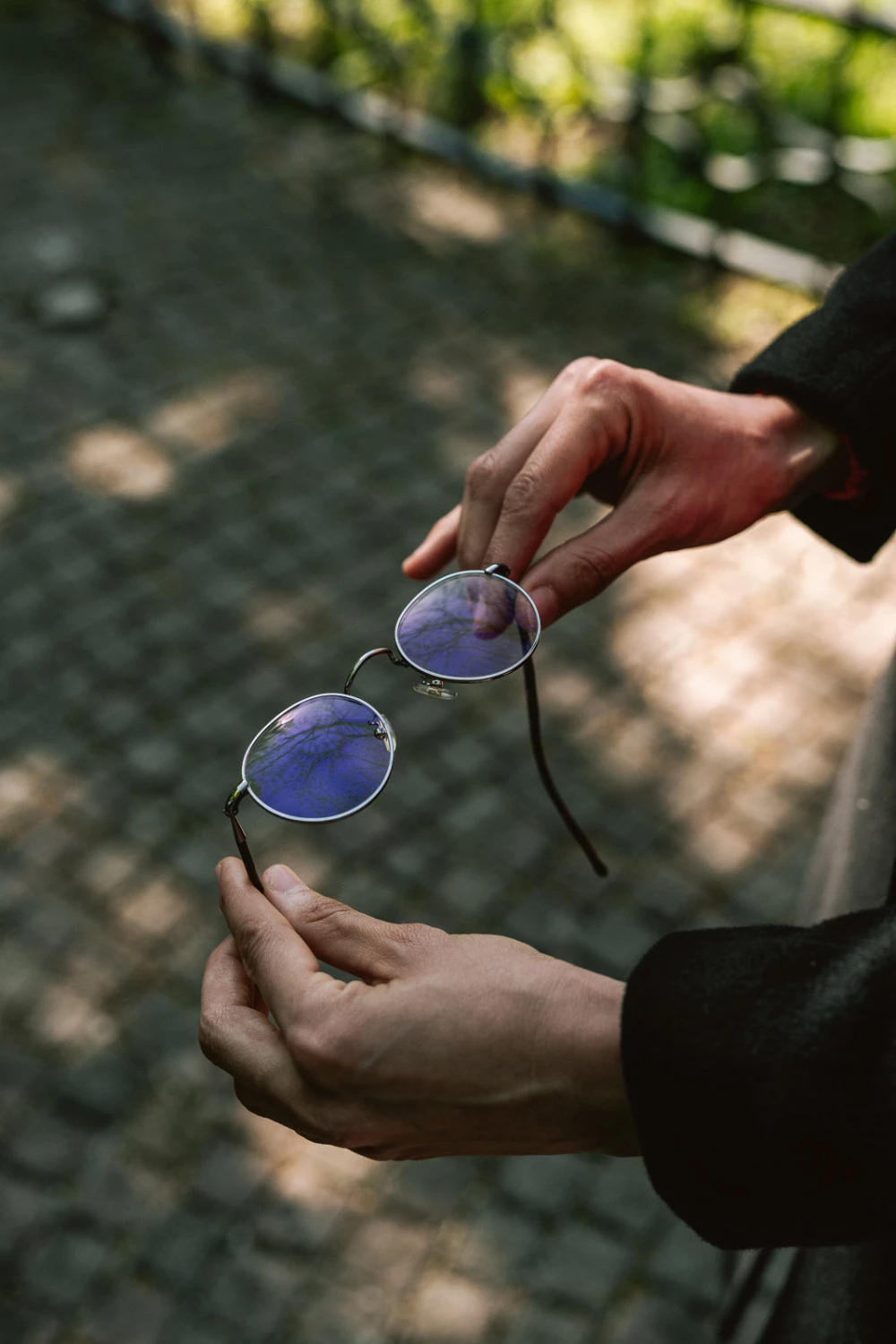
At ZITA we offer highest quality lenses that reliably block only the truly dangerous part of the blue spectrum.