Contact lenses – myths, misconceptions and the most common wearing mistakes


7. August 2025, Author: Barbara Garaj, Photo: Barbara Garaj
Contact lenses are a brilliant alternative to glasses. More and more people wear them for greater comfort during sport and freedom of movement. But it's easy to forget they shouldn't be worn non-stop – after years of daily use, dry eyes, irritation or discomfort can show up.
At the same time, there are plenty of myths and misunderstandings circulating about contact lenses. So we've put together a list of the most common mistakes we come across at the optician's, along with tips on how to avoid them.
Myths about lenses
You can't swim in contacts
When it comes to swimming in a pool or the sea, while lenses generally don't belong in water, we can make an exception for higher prescriptions. But they must be dailies only, which you throw away immediately after you get back from your swim.
Monthly lenses aren't suitable because you risk introducing infection or microbes from the water into your eye. The inflammation that monthlies can cause may have short-term but also long-lasting consequences, and you'd have to say goodbye to lenses completely for a while.
A lens can get lost in your eye and travel to your brain
You really don't need to worry that a lens will get lost in your eye and wander irretrievably inside your head. There's a thin bulbar conjunctiva on the eye's surface which transitions smoothly into the eyelid, creating a barrier the lens can't pass through.
There are cases when a lens disappears during removal, but in reality it's just slipped under the eyelid and needs to be retrieved. If you can't find it though, we recommend seeking help from an ophthalmologist or coming to see us at the optician's.
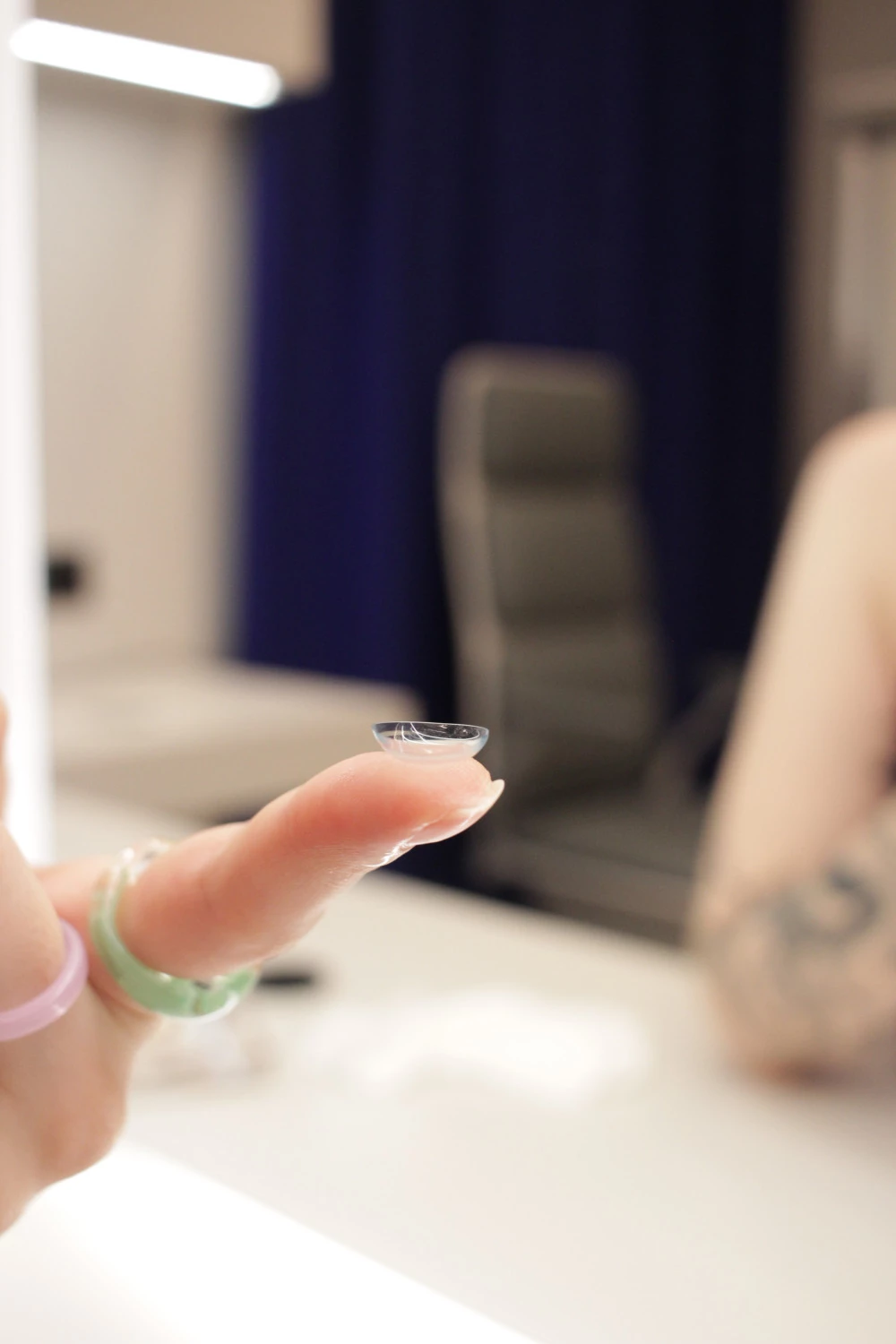
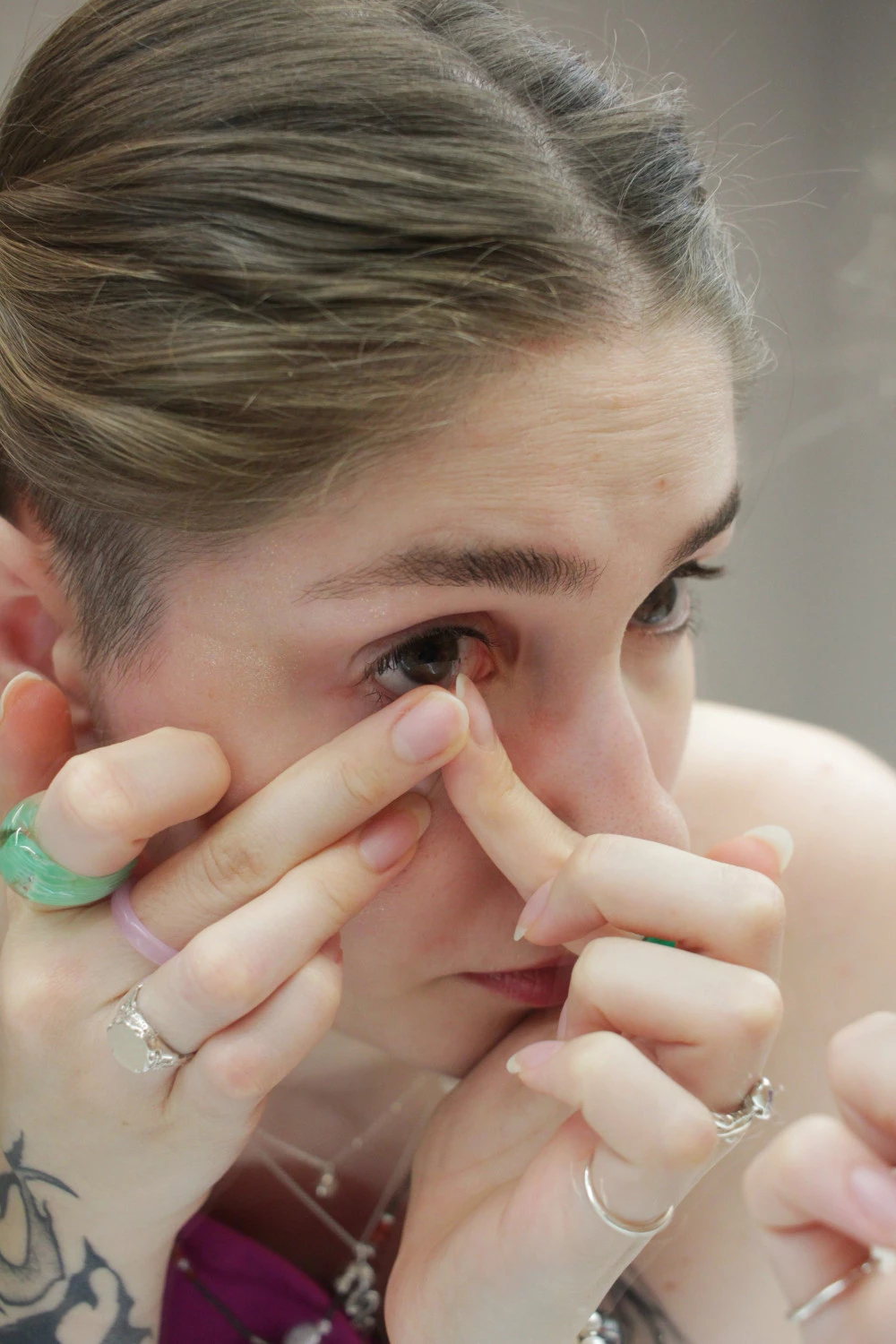
I'm afraid my contact lens will fall out if I blink
A lens can't fall out of your eye on its own. During a check-up at our optician's, we also make sure the lens has the right dimensions and sits properly on the cornea surface. Under no circumstances should it just fall out.
Most common lens-wearing mistakes
We wear monthly lenses longer than we should – we put them in even after they've expired – don't forget that a month after opening they've already lost their function, contain impurities and can harm the eye.
We put monthly lenses straight into the case after taking them out without mechanical cleaning in the hand – before placing the lens in fresh solution in the case, you need to put the lens in your palm, pour a little solution into your palm and rub the lens with your fingertip for about a minute to mechanically remove impurities.
We don't change the lens solution in the case but top up old solution with new – always make sure the lenses are immersed in fresh solution.
We don't use peroxide solution for monthly lenses – besides regular solution, monthly lenses should also be cleaned in peroxide solution, which ensures their deep cleaning. It's most commonly used overnight – lenses must stay in it for at least 6 hours until the solution is fully neutralised. Only then can you put the lenses directly in your eye.
We don't wash our hands with soap and water before applying lenses and handling them, we use hand sanitiser instead – we can irritate our eyes with the alcohol the sanitiser contains, and our eyes will sting.
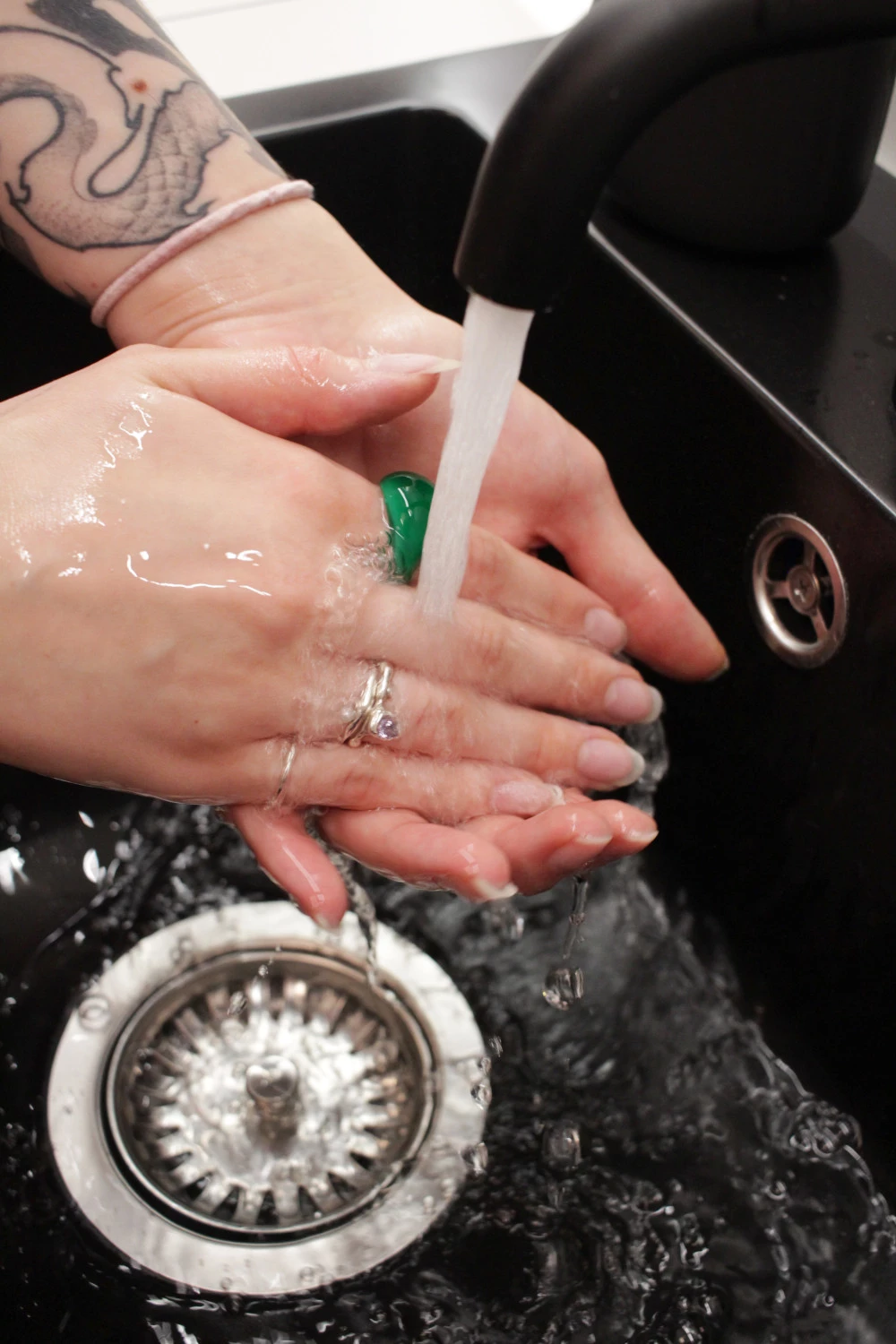
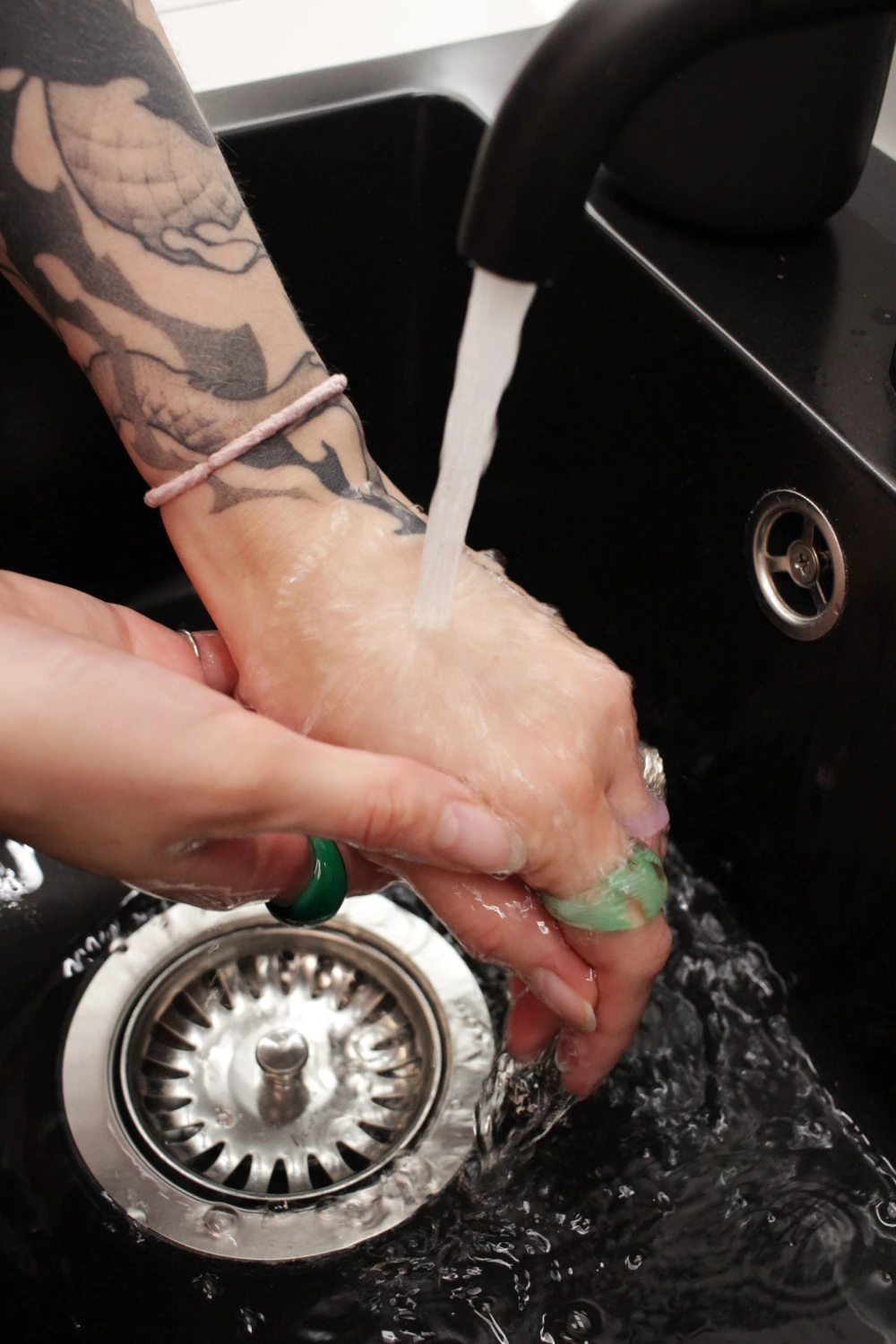
We handle contacts with unwashed or wet hands – lenses shouldn't come into contact with ordinary water, which isn't free of microorganisms, so we can introduce infection into our eyes. After washing, it's therefore necessary to dry your hands thoroughly.
We apply them after doing face and eye makeup – we recommend putting lenses in before makeup, and you'll also avoid contaminating the lens with creams or mascara.
We sleep in lenses – during sleep our eyes don't breathe and we wake up in the morning with red and dry eyes. We shouldn't sleep in lenses at all.
We use our nails when applying them – we can damage the lens this way, or in worse cases even the cornea, so it's essential to use fingertips.
We lend each other lenses – just as with underwear or a toothbrush, we don't lend out lenses. After all, they're usually tailored to a specific customer.
We leave lenses in after swimming in a pool and carry on wearing them for the rest of the day – with daily lenses we recommend throwing them away after being in water, and monthly lenses don't belong near water at all.
Did you know...?
Prescription in glasses and lenses may not be the same
Spectacle lenses sit about 12 mm in front of the eye, while a contact lens sits directly on the cornea. That's precisely why the prescription values may differ slightly. If you wear lenses, we always recommend having your prescription adjusted by a professional – lenses require their own parameters.
Contact lenses don't replace glasses
Lenses are a brilliant help for sport, travel or during a demanding day. But they're not meant for continuous wear – especially not for whole months or years without a break.
The cornea needs to "breathe", and if you wear lenses from morning to evening every day, over time you can bring on chronic dry eyes, minor injuries or reduced cornea sensitivity. At ZITA we're happy to recommend comfortable glasses that'll be a brilliant and stylish replacement for lenses.
Contact lenses aren't suitable for everyone
Dry eyes, inadequate hygiene habits or frequent infections can be reasons why lenses aren't the best choice. That's why we recommend having their fitting consulted with a professional who'll tell you whether and how lenses can be worn safely and comfortably.
Many people are also worried about actually touching the eye, which can be a reason why they never try lenses. And that's fine – we all have our comfort boundaries.
From our own experience though, we know that with patient guidance and practical tips this fear can be overcome. We're happy to show you how at our optician's.
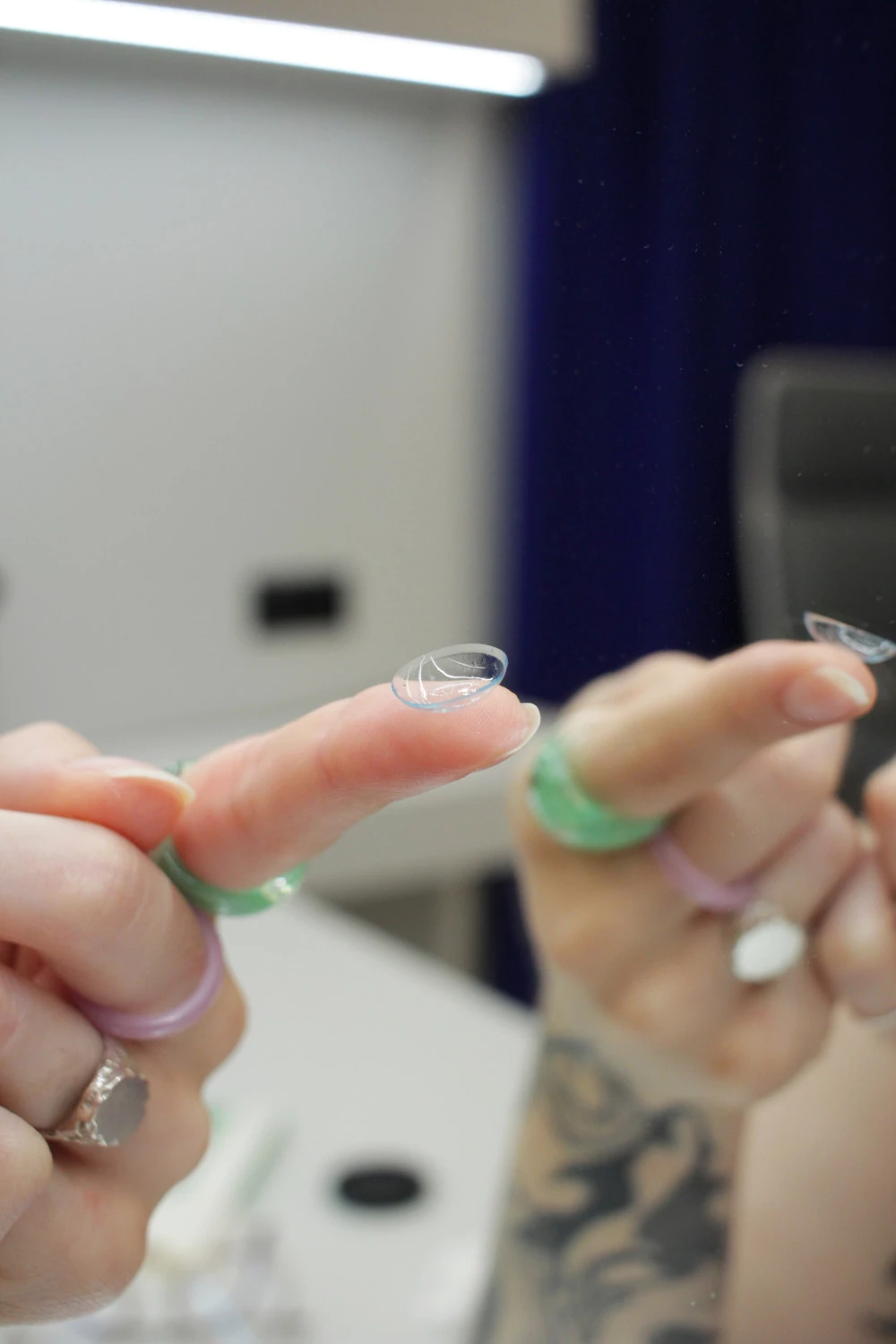
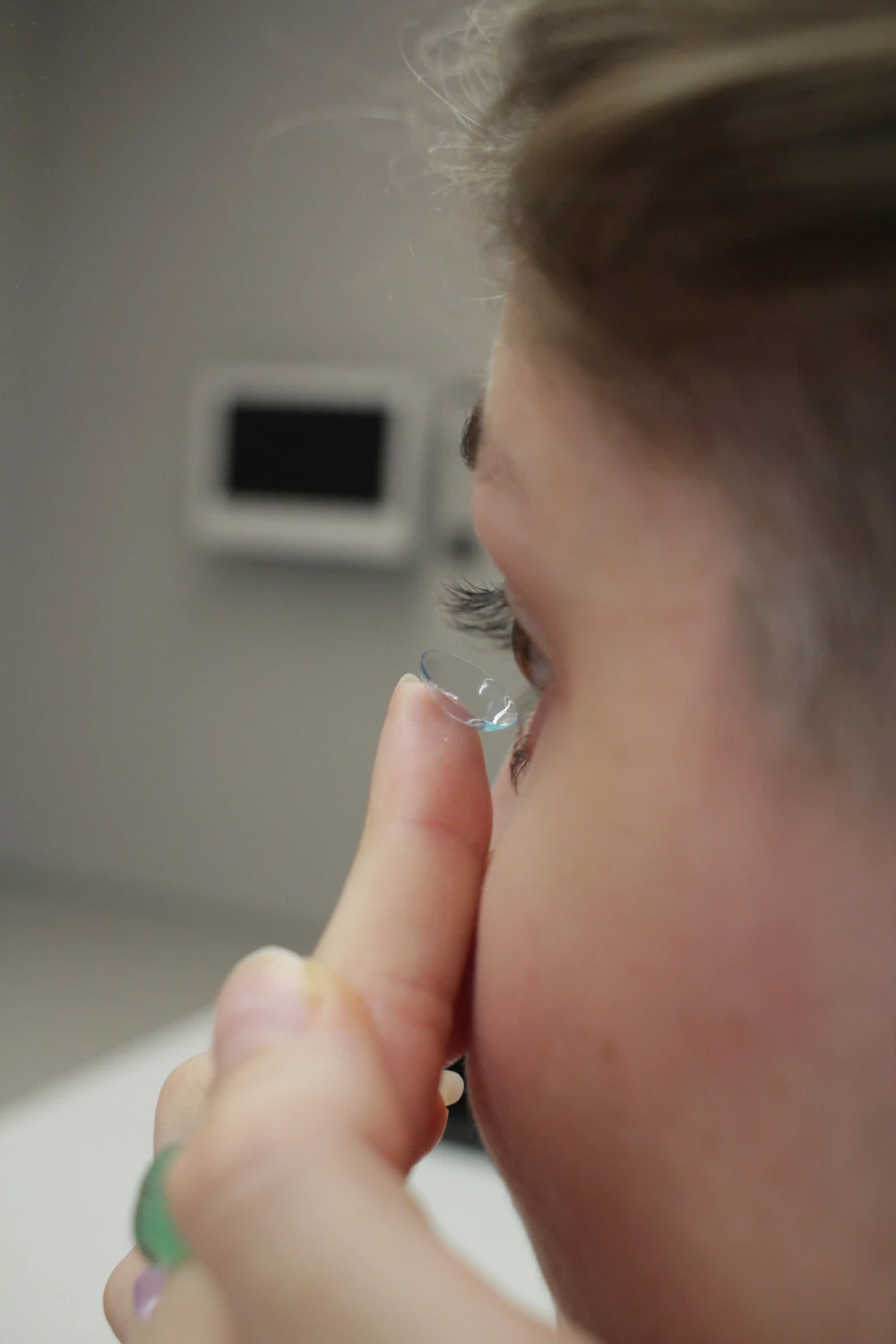
There are multiple contact lens parameters
Each type of lens has different dimensions and properties – and that's precisely what affects how it "sits" on the eye. An incorrectly chosen type can cause discomfort or impaired vision.
The right model isn't a matter of chance or feel, but the result of precise measurement. We're happy to help with the right selection directly at our optician's, under our optometrist's supervision.